
Home > Zirconia Beads > Alumina Composite Zirconia Beads
Alumina Composite Zirconia Beads
Details
Zirconia Content:
ZrO₂+Al₂O₃+Others
Density:
2.95 – 5.3 g/㎤
Fill Density:
1.75 – 3.2 g/㎤
Hardness:
≥800HV
Particle Size Range:
Φ0.2mm-Φ20.0mm
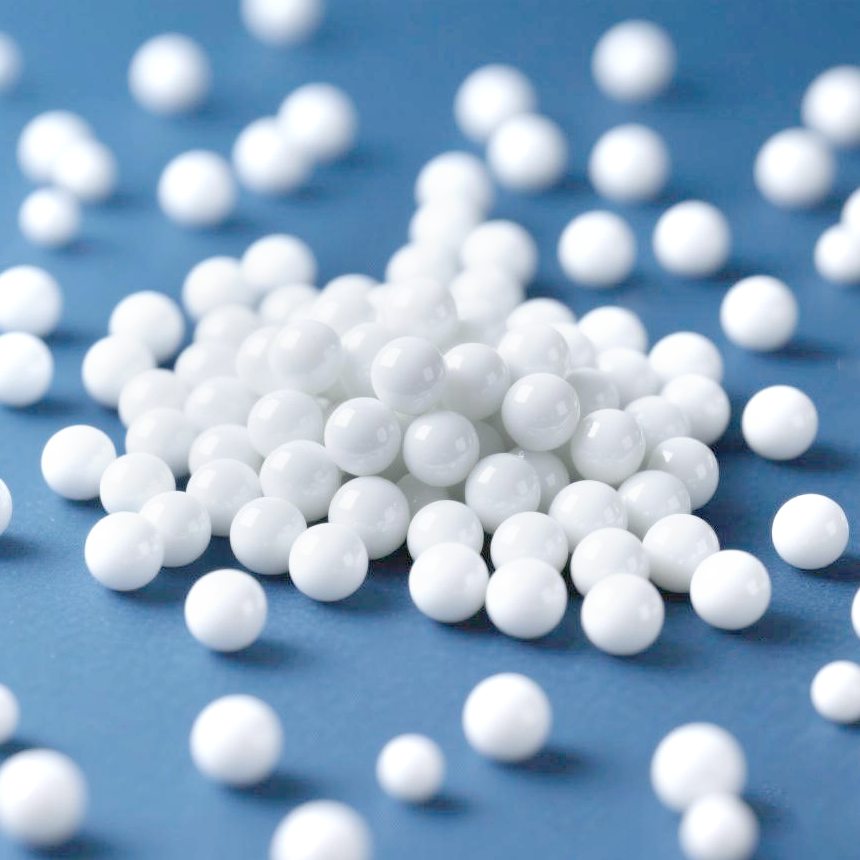
Our company produces alumina composite zirconium beads (also known as zirconium-aluminum composite beads), a high-performance and cost-effective grinding media for industrial applications. To help some users address cost and grinding material issues, we have improved our zirconium-aluminum composite beads by adjusting the Al₂O₃, ZrO₂, SiO₂, or other metallic materials to fully utilize the excellent toughness and wear resistance of zirconium oxide and the high hardness and corrosion resistance of alumina.
Related Hot Products
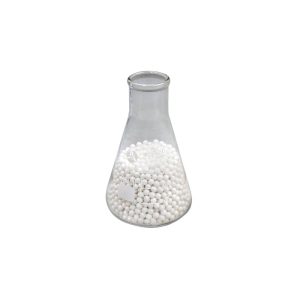
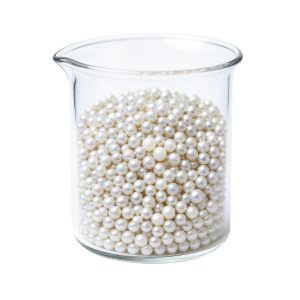
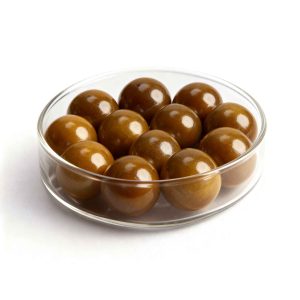
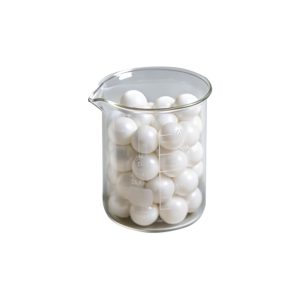
Alumina-zirconia composite beads belong to a large family with tunable composition. Their fundamental principle is “composite reinforcement” using a second-phase material, either by introducing zirconia (ZrO₂) into an alumina (Al₂O₃) matrix or alumina into a zirconia matrix, thus achieving a balance between the excellent properties of both materials.
The performance of alumina-zirconia composite beads is highly dependent on their manufacturing process. The mainstream route is: rolling/tipping molding → high-temperature sintering.
We primarily use titration molding. Engineers drip the mixed slurry into the molding liquid through a specific orifice, utilizing the surface tension of the liquid to form grinding beads with a sphericity ≥95. This method produces beads with extremely high sphericity and a uniform, dense internal structure, suitable for preparing sub-millimeter-level high-precision microspheres.
The molded sphere blanks then undergo sintering at temperatures above 1400℃. During this process, mass migration and grain growth occur between powder particles, forming a strong metallurgical bond that imparts the final strength, hardness, and wear resistance to the beads. By precisely controlling the sintering temperature and atmosphere, grain size can be adjusted, thereby optimizing the physical properties of the beads.
| Parameter 1 | Parameter 2 | Parameter 3 | Parameter 4 | Parameter 5 |
|---|---|---|---|---|
| Product Data | Product Data | Product Data | Product Data | Product Data |
| Product Data | Product Data | Product Data | Product Data | Product Data |
| Product Data | Product Data | Product Data | Product Data | Product Data |
| Product Data | Product Data | Product Data | Product Data | Product Data |
| Product Data | Product Data | Product Data | Product Data | Product Data |
More About Alumina Composite Zirconia Beads
Watch the Product Video
See the PDF file
Guidelines for Alumina Composite Zirconia Beads
How to Choose the Right Zirconium Aluminum Composite Beads?
We recommend that users understand the differences between our various models of alumina composite zirconium beads when purchasing our products, such as differences in hardness and density. Based on the viscosity and hardness of the material you need to grind, select the appropriate size and model of composite beads.
Users also need to select appropriate grinding beads based on the equipment they are using, such as sand mills or ball mills; otherwise, it may cause wear and tear on the agitator or lining of the equipment.
Generally, the fineness of grinding any material is related to the particle size of the beads. The smaller the bead diameter, the finer the ground material will be, but relatively speaking, the overall production capacity will also decrease.