
Home > Zirconia Beads > Yttria-Stabilized Zirconia Beads
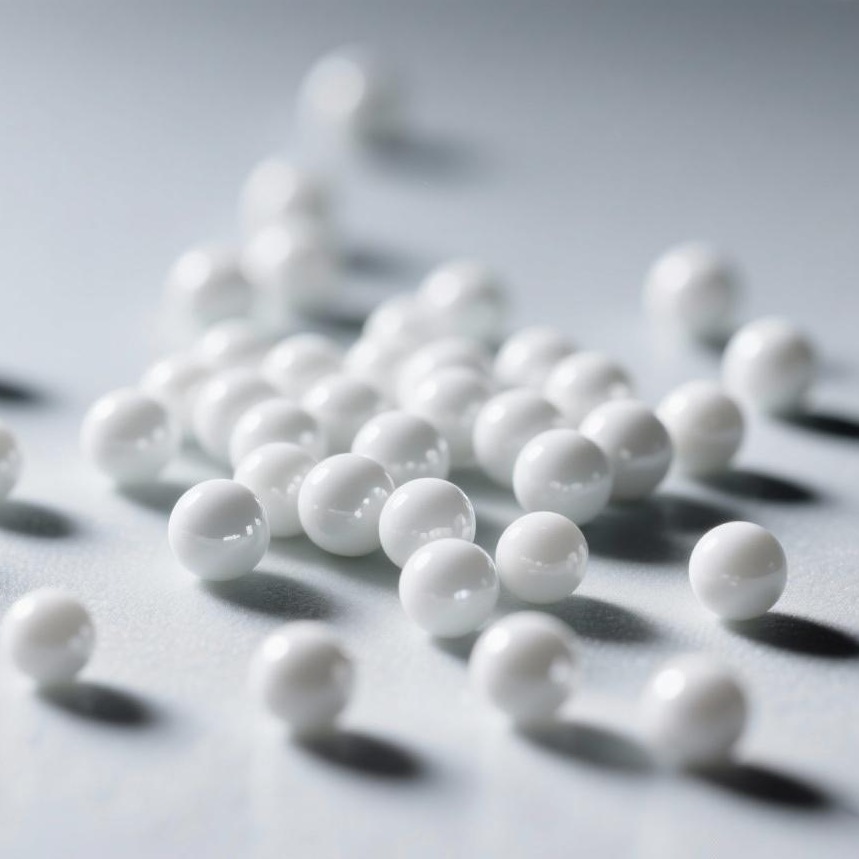
Yttria-stabilized zirconia beads
Details
Zirconia Content:
94.5%
Density:
6.05 g/㎤
Fill Density:
3.8 g/㎤
Hardness:
1250HV
Particle Size Range:
Φ0.1mm-Φ3.0mm
The chemical composition of yttria-stabilized zirconia beads consists of more than 95% ZrO₂ and 4.5-5.5% Y₂O₃. Pure zirconia undergoes a crystal phase transformation with significant volume changes at varying temperatures, making it prone to cracking. The addition of yttria allows it to maintain a stable tetragonal or cubic phase at room temperature, thus achieving excellent mechanical and thermal properties.
Application:
- Coating
- Cosmetic
- Electronic paste
- Pesticide
- Additive
- Mining Industry
Related Hot Products
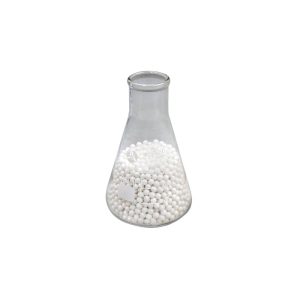
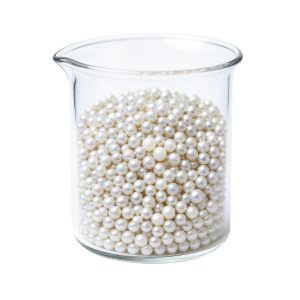
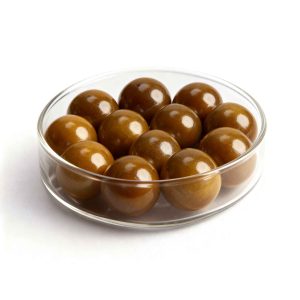
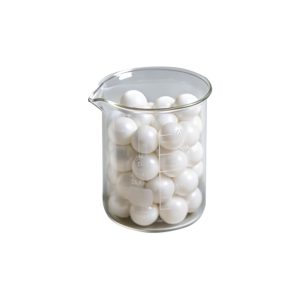
Yttria-stabilized zirconia beads are an indispensable high-performance, chemically stable grinding medium in the chemical, biopharmaceutical, and electronic paste industries.
It remains stable in highly acidic environments, and yttria-stabilized zirconia beads can withstand high temperatures up to 600 degrees Celsius. Furthermore, yttria-stabilized zirconia beads possess very high compressive strength and impact resistance, with compressive strength exceeding 7500 MPa, and impact resistance enhanced by 30%-50% through a phase transformation toughening mechanism.
Yttria-stabilized zirconia beads possess the following main characteristics:
1. High density: The density is generally ≥ 6.0 g/cm³. Due to its high density, yttria-stabilized zirconia beads generate higher impact forces at the same rotational speed, which is particularly evident in sand mills. At high rotational speeds, the yttria-stabilized zirconia beads impact the material through inertia, resulting in finer grinding of the material.
2. High wear resistance and high hardness: Yttria-stabilized zirconia beads have a Mohs hardness of >9. Higher hardness indicates excellent wear resistance, resulting in a very low wear rate and a long service life. This significantly reduces the frequency of downtime for bead replacement, improving customer production efficiency.
3. High toughness: yttria-stabilized zirconia beads have top-tier toughness among ceramic materials, exhibiting strong impact resistance and being less prone to breakage.
4. Chemical inertness: Due to their strong chemical stability, they are resistant to both acids and alkalis and do not easily react with materials, thus minimizing contamination. They are widely used in high-end materials such as lithium batteries and ceramic slurries.
| Parameter 1 | Parameter 2 | Parameter 3 | Parameter 4 | Parameter 5 |
|---|---|---|---|---|
| Product Data | Product Data | Product Data | Product Data | Product Data |
| Product Data | Product Data | Product Data | Product Data | Product Data |
| Product Data | Product Data | Product Data | Product Data | Product Data |
| Product Data | Product Data | Product Data | Product Data | Product Data |
| Product Data | Product Data | Product Data | Product Data | Product Data |
More About Yttria-stabilized zirconia beads
Watch the Product Video
See the PDF file
Guidelines for Yttria-stabilized zirconia beads
Application Scenarios of Yttria-stabilized zirconia beads
Due to the above characteristics of yttria-stabilized zirconia beads, they are widely used in many fields:
1. High-end electronic pastes
Electrode pastes, conductive pastes, and dielectric pastes for multilayer ceramic capacitors – these are high-end applications of yttria-stabilized zirconia beads.
Photovoltaic pastes: Preparation of conductive pastes for solar cells, including silver paste and aluminum paste.
2. High-end coatings and inks
High-end automotive coatings: Yttria-stabilized zirconia beads can be used to grind coatings to a very fine degree, making the car paint color brighter and the coating adhere better to the car body.
Inkjet printing inks: Inkjet printing inks require very fine particles, smaller than the nozzle size to prevent clogging of the printer nozzle.
3. Applications in New Energy
Negative electrode materials: Dispersion of graphite and silicon-carbon composite materials
Positive electrode materials: Dispersion of lithium iron phosphate, lithium cobalt oxide, and ternary materials at the nanoscale
Fuel cells: Used for grinding zirconia-based solid electrolyte powders to ensure high purity and uniformity.
4. Pharmaceutical and cosmetics industries: High-end cosmetics (dispersion of titanium dioxide)
5. Chemical and mineral industries: Pesticide suspensions, high-grade pigments (such as titanium dioxide), rare earth elements, etc.
Classification of Yttria-Stabilized Zirconia Beads
Yttria-stabilized zirconia beads refer to beads with a zirconia content of nearly 95%, and are generally divided into two categories: ZR95 Nano zirconia beads and ZR95 high purity zirconia beads.
Their production process involves using high-fineness and high-whiteness zirconia powder, which is then mixed with yttrium oxide, calcium oxide, etc., in specific proportions. The mixture is then processed using methods such as titration, rolling, or compression molding.
This process forms spherical pellets, but these pellets still contain a significant amount of moisture, which needs to be removed through drying. They are then subjected to high-temperature sintering (some processes may use low-temperature sintering) for densification. The rough pellets then undergo grinding and polishing to finally obtain smooth, uniformly sized, and highly wear-resistant yttria-stabilized zirconia beads.
Precautions for Using Yttria-Stabilized Zirconia Beads
To extend the service life of yttria-stabilized zirconia beads, please consider the following four precautions during use:
1. Matching the operating conditions
The material viscosity needs to match that of the yttria-stabilized zirconia beads.
Materials with excessively high viscosity will coat the zirconia beads, while materials with excessively low viscosity will accelerate bead wear. Therefore, a suitable material viscosity will allow the yttria-stabilized zirconia beads to perform optimally, resulting in better product fineness.
Machine speed match the beads’ size
Adjust the equipment’s rotation speed according to the size of the yttria-stabilized zirconia beads. Larger bead sizes require a lower rotation speed to prevent violent collisions between the beads and the internal cavity of the equipment, which could cause damage. Smaller bead sizes require a higher rotation speed to ensure sufficient centrifugal force for effective grinding.
2. Bead filling ratio
yttria-stabilized zirconia beads are generally used in sand mills and ball mills. The loading ratio for sand mills is 70%-85%, and for ball mills, it is 40%-60%. Avoid overfilling. Too many zirconia beads can lead to excessive collisions with the equipment’s internal cavity, potentially damaging the equipment; too few beads will result in insufficient grinding effect and fineness.
3. Grinding Environment
Due to their stable chemical properties, yttria-stabilized zirconia beads are resistant to both acids and bases. However, prolonged exposure to oxidizing or strongly reducing materials should be avoided to prevent chemical corrosion.
During the grinding process, high temperatures should be avoided to prevent damage to the zirconia beads. Sustained high temperatures will reduce the toughness of the beads, leading to breakage.
4. Storage and Maintenance
yttria-stabilized zirconia beads should be stored in a dry and well-ventilated place to prevent them from absorbing moisture, which can affect the grinding performance. They should also be kept away from acidic and alkaline environments to prevent corrosion. Different sizes and purities of yttria-stabilized zirconia beads should be stored separately for easy retrieval; avoid collisions when handling the beads to prevent damage.
5. Wear Monitoring and Replacement
yttria-stabilized zirconia beads need to be sampled and inspected regularly for wear. If the samples show significant wear, deformation, or scratches on the surface of the zirconia beads, please sort and replace them promptly.
In addition, the material also needs to be monitored regularly to prevent broken zirconia beads from mixing into the material, which could lead to excessive zirconia content in the material.
Residual zirconia bead fragments inside the equipment chamber also need to be cleaned regularly to avoid affecting the grinding effect.
6. Safety Operating Procedures
When placing, inspecting, or replacing zirconium beads, the machine must be stopped before performing these operations.
If the yttria-stabilized zirconia beads are damaged or there is dust, wear gloves and a mask to prevent scratches and inhalation of dust.